Featured
Table of Contents
Search innovation has moved far beyond the period of matching keywords to text strings. In 2026, the primary objective of search engines is to comprehend the world through entities-- unique, distinct items, individuals, places, or concepts. This shift towards semantic search means that visibility in New York now depends on how well a brand name is placed within a wider understanding graph instead of simply the number of times a particular expression appears on a page.
Comprehending Entity-Based Search in 2026
Search engines now treat details as a series of connected nodes. When a user look for specialized marketing help, the algorithm does not simply try to find those exact words. Instead, it identifies the intent behind the question, the location of the user in New York, and the historic context of comparable searches. This process involves mapping the relationship between the provider and other acknowledged entities in the local region.
Steve Morris, CEO of NEWMEDIA.COM, has noted in recent market discussions that the "identity" of a brand in the eyes of an AI is its most important property. If an AI can not verify that an organization is a real entity with specific characteristics-- such as a physical presence in Dallas, Atlanta, or New York-- it is not likely to advise that service in generative search results page. More organizations now prioritize SEO Challenges as part of their long-term growth plan to ensure these entity connections are clear and authoritative.
The Role of Semantic Triples
In the 2026 search environment, data is typically processed in triples: subject, predicate, and item. "Company X (Subject) supplies (Predicate) digital strategy (Item)" When search engines discover constant triples across the web-- from social media profiles to news posts in New York City or Miami-- they develop confidence in the entity. This confidence translates directly into greater presence in AI-generated overviews and conventional search results alike.
Content intelligence involves determining which triples are most appropriate to a specific industry. By analyzing how competitors in New York are pointed out, companies can find gaps in their own entity profiles. If a competitor is often connected with "sustainability" or "high-end design," and those are valued qualities in the knowledge graph, a brand needs to actively work to establish those very same semantic links through its material method.
Material Intelligence and the RankOS Platform
Data-driven decision-making has actually ended up being the standard for keeping search prominence. Platforms like RankOS have changed how companies monitor their presence by moving far from simple rank tracking. Instead, these systems examine "search share of model"-- the frequency and belief with which an AI design points out a brand when inquired about marketing solutions in New York.
This type of intelligence permits a more granular approach to material production. Instead of thinking which subjects might perform well, brands can see which entities are presently trending in the understanding chart for the surrounding area. For example, if there is a rise in interest regarding ecommerce integration in LA or Chicago, the platform identifies the related entities-- such as particular software application, logistics service providers, or regulatory bodies-- that should be discussed alongside the main service to build topical authority.
Efficient AI Survey Analysis Tools stays a primary chauffeur of natural traffic in competitive markets where simple keyword optimization no longer yields results. Success in 2026 needs a deep understanding of how these various data points intersect to form a cohesive brand name story that AI online search engine can easily absorb and classify.
AI Search Optimization (AEO) and GEO
The rise of Generative Engine Optimization (GEO) has actually introduced new requirements for content structure. AI designs choose details that is presented in a method that is simple to sum up and mention. This indicates utilizing clear headings, structured information, and concise answers to common questions. When a user in New York asks an AI for the most trustworthy provider of professional digital work, the AI tries to find "attestation"-- proof from multiple sources that validates the company is a leader in that field.
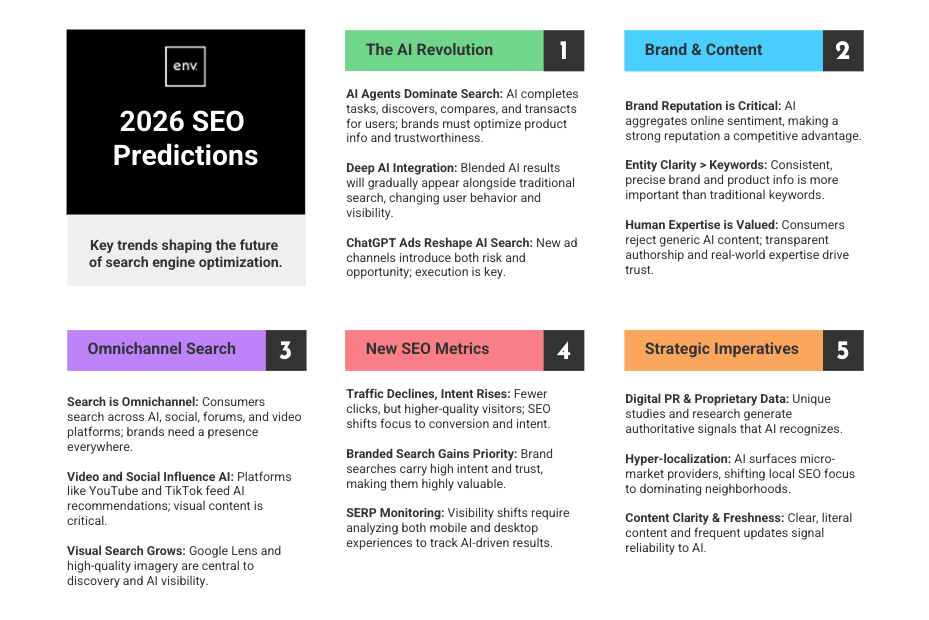
Method in 2026 includes more than simply composing blog site posts. It needs a presence across various platforms where AI designs train, including market online forums, academic papers, and major news outlets. Steve Morris has actually stressed that being featured in high-authority publications functions as a signal of trust that AI models utilize to weight their recommendations. This is particularly true for organizations running in significant centers like Nashville or New York, where the volume of completing information is high.
Structure Topical Authority in New York
Topical authority is the measure of a brand's knowledge across an entire topic. To achieve this, content must cover the main service and all associated sub-topics. For a company providing technical marketing, this may consist of in-depth guides on information privacy, user experience, and the particular economic aspects impacting the local economy.
Search engines utilize these clusters of info to identify if a website is a conclusive source. If a website only has one page about a subject, it is seen as a "thin" entity. Nevertheless, if it has a deep library of interconnected material that recommendations other known entities-- such as local landmarks in New York or widely known industry figures-- it ends up being a high-confidence node. Numerous brands find success by concentrating on SEO Challenges in AI Search to record particular user intent and construct this necessary depth.
- Structured Data: Carrying out schema markup that explicitly defines the relationship between the organization and its services.
- Entity Refresh: Routinely upgrading content to show brand-new developments in the industry to show the entity is active.
- Sentiment Tracking: Ensuring that discusses of the brand name across the web are favorable, as AI models think about sentiment when ranking entities.
- Area Specificity: Linking the brand name to local occasions, organizations, and news in New York to reinforce geographic significance.
The Value of Multimedia Entities
By 2026, search is no longer text-only. Images, videos, and even audio files are treated as entities. A picture of a shop in New York or a video of a CEO speaking at a conference in Denver or Dallas is indexed and connected to the brand's knowledge chart. Optimizing these possessions includes more than simply alt-text; it requires clear context so that AI can "see" the relationship in between the visual and the service.
For example, a video showing a new marketing tool ought to be hosted on a page that offers a transcript and utilizes schema to link the video to the particular service entity. This ensures that when a user carries out a visual search or asks a conversational AI for a presentation, the brand's possessions are the ones chosen. The objective is to produce a multi-dimensional presence that leaves no doubt about the brand name's know-how in the region.
The Future of Material Strategy
As online search engine end up being more conversational, the way material is composed should adapt. Users in 2026 typically engage with search through voice or chat, asking complex concerns rather than typing brief expressions. This shift favors content that is written in a natural, reliable tone. Avoid lingo that does not add to the entity's clearness. Rather, focus on providing direct worth that addresses the "why" and "how" behind digital trends.
Information from RankOS recommends that the most effective brand names are those that treat their site as a living part of the understanding graph. They do not simply publish content and leave it. They keep an eye on how their entity is being viewed in real-time and adjust their method to fight false information or to profit from new semantic connections. This proactive technique is essential for staying ahead in a search environment that is continuously being recalculated by AI.
The digital company environment has changed. Firms that when focused entirely on backlinks now concentrate on "entity citations" and "trust signals." Running from offices in LA, Miami, NYC, and New York, companies are now charged with handling the whole digital footprint of a brand name to ensure consistency. This consists of whatever from social networks belief to the precision of business listings in the United States.
Keeping a strong entity existence is a constant process. As brand-new services emerge and consumer behavior shifts in New York, the knowledge chart will progress. Brand names that remain notified about these modifications and utilize sophisticated tools to monitor their visibility will be the ones that grow. The focus remains on clearness, authority, and the strength of the connections in between business and the world around it.

Latest Posts
Emerging PR Trends Every Firm Must Adopt
Advanced Practices for Online Reputation Management
Ways to Optimize Your Corporate Identity for 2026